How Much Does Brush Clearing Cost in South Carolina?
Published cost guides put brush with no major trees near $330 to $630 an acre. Light brush runs $800 to $1,800 and heavy brush $1,600 to $3,000, while wooded ground reaches $2,500 to $5,000. Minimums run $250 to $600 a visit. These are market figures, not a quote, and density, stem size, access, wet ground and hauling move them.
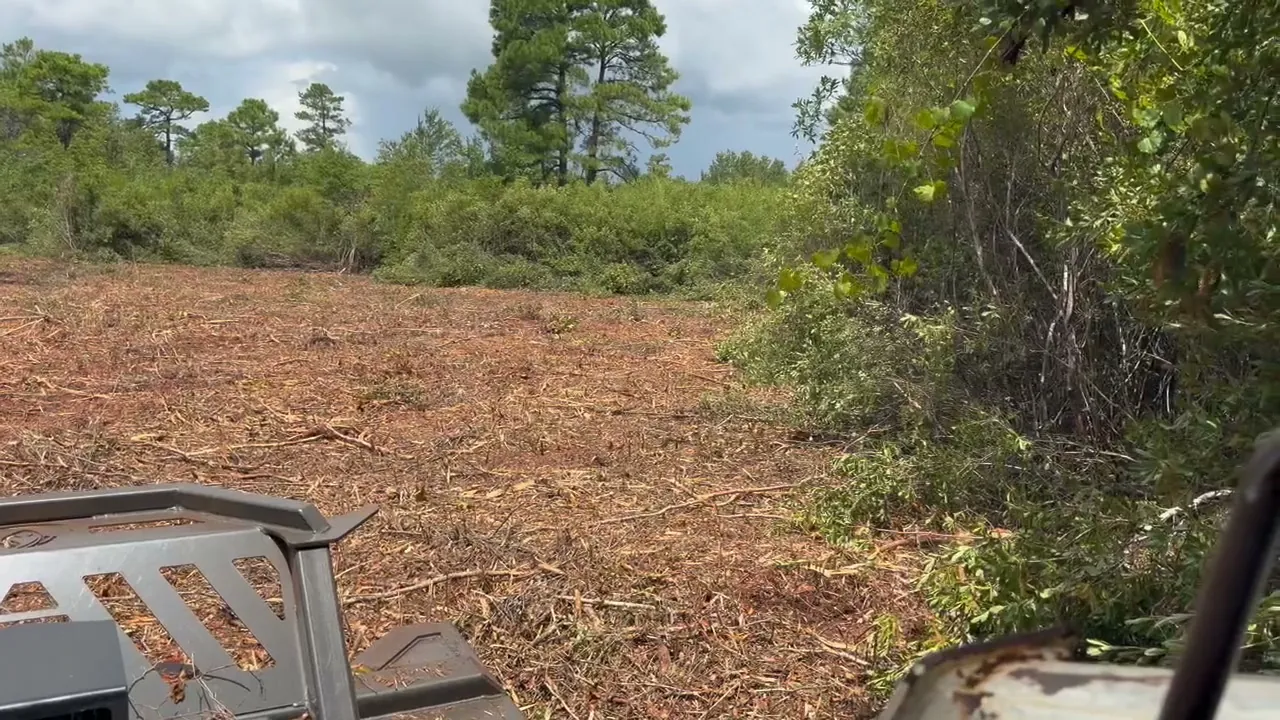
Brush clearing takes out the growth under and around the trees you keep. That might be an overgrown yard edge or a lot choked with briar and vines. Our brush clearing and removal service grinds that growth into mulch where it stands. The chips stay on the ground as cover, and estimates are free and done on site.
What does brush clearing cost per acre?
Published guides split brush clearing cost per acre by how much is growing and how big it is. Brush with no major trees sits at the bottom, near $330 to $630 an acre. Ground that is half brush and half trees runs $1,600 to $3,000. Wooded ground, trees and brush together, reaches $2,500 to $5,000.
| Ground or method | Published range per acre | Source type |
|---|---|---|
| Brush with no major trees | $330 to $630 | National cost guide (Skidsteers.com) |
| Light brush, no trees or a few young trees | $800 to $1,800 | National cost guide (HomeGuide) |
| Lightly forested land | $730 to $2,300 | National cost guide (Skidsteers.com) |
| Heavy brush, about half brush and half trees | $1,600 to $3,000 | National cost guide (HomeGuide) |
| Wooded, trees and brush together | $2,500 to $5,000 | National cost guide (HomeGuide) |
| Forestry mulching | $400 to $800, up to $2,000 on dense ground | National cost guide (HomeGuide) |
Stem size moves a property from one row to the next. Our forestry mulcher head takes brush, saplings and small trees up to roughly 6 to 8 inches across. Trees past that size fall outside what brush clearing covers.
Brush clearing is the light end of clearing work. Taking a whole wooded tract down to open ground is a bigger job. For that tier, see what clearing wooded acreage costs in South Carolina.
Why do the published ranges disagree?
The guides count different costs. One puts brush with no major trees at $330 to $630 an acre. Another puts land with no trees or a few young trees at $800 to $1,800. Some quotes fold in hauling and disposal, while others bill them separately.
Hauling is the line to check first. One guide notes that some clearing companies chip smaller debris on site to cut disposal costs. Others load everything onto trucks and charge by the truckload. A quote with haul-off built in will look high next to one without it, so ask for an itemized bid.
Machine time explains the rest. One guide says heavily forested land demands more time, labor and equipment. Brush with no major trees takes the least machine time, so it sits at the bottom of the table.
The unit matters too. A third guide uses square feet, with a May 2026 national average of $0.89 to $1.45 per square foot. Its estimate builds in setup and travel time typical of small jobs, and tree removal is extra. Spread across a full acre, that rate would land far above every per acre figure in the table.
What makes brush cost more on the coastal plain?
Wet ground and thick underbrush push coastal jobs up the ranges. Georgetown County’s natural resources plan calls marshy, low-lying ground typical of the county. Soft ground slows a machine, and so does brush tied together with briar and vines. Machine time is the main thing a bid prices.
The SC State Climatology Office puts coastal plain rainfall at 50 to 52 inches a year. It also finds a second rainfall peak parallel to the coast, about 10 to 20 miles inland. Summer sea-breeze thunderstorms feed it. One national guide warns that wet conditions raise equipment costs when machines get stuck in mud.
Our Bobcat T300 runs on rubber tracks that spread its weight on soft coastal ground. Standing water still waits for a dry stretch. The machine also needs a way in and room to turn. A narrow gate or a strip beside a ditch means slower passes.
Wax myrtle is one reason coastal brush fills back in. NC State Extension notes the native shrub tends to spread by suckers, sometimes forming sizable colonies. It grows anywhere from wet, swampy ground to dry uplands and tolerates salt spray. An edge cleared once and then left alone gives it room to spread.
Invasive growth is its own case. Running bamboo and privet tend to sprout back after a cut. That is why clearing bamboo and privet thickets often takes more than one pass.
Is it cheaper to mulch brush in place or haul it off?
Hauling adds steps that mulching skips. Hauled brush gets cut, piled, loaded and driven off, and one guide puts each pickup load at $150 to $200. A forestry mulcher grinds brush where it stands and leaves the chips on the ground. That means no loads to pay for and no dump runs.
Labor is the other haul-off cost. The same guide lists brush cleanup labor at $50 to $80 an hour, on top of the loads. With mulching there is no pile to load, because the chips are the finished ground cover.
Per acre figures from that publisher point the same way. Its brush removal page lists light brush at $800 to $1,800 an acre. Its mulching page lists $400 to $800 an acre, up to $2,000 on dense ground. The two pages describe different ground, so treat the gap as rough.
Bigger acreage that needs the whole underbrush layer taken down runs as forestry mulching for saplings and small trees. The chips stay as cover there too.
Can you burn brush instead in South Carolina?
You can, with notice. Outside city and town limits, state law requires you to notify the SC Forestry Commission before burning outdoors. Inside town limits, local ordinances decide. Burning is a job you handle yourself, since our work grinds brush into mulch on site.
Notice goes in online or through your county’s toll-free line. For yard debris, the Commission also sets conditions. Burn only plant material and clear a firebreak around the pile. Keep equipment on hand to control it, and stay with the fire until it is completely safe.
Horry County adds its own rules. The fire must sit at least 50 feet from any structure and any other property line. A county burning ban stops all open burning. On a narrow lot, the setback alone can rule out a burn pile.
The Commission says people cause 98 percent of wildfires, and about half of those start as escaped debris burns. Wax myrtle raises the stakes, since NC State Extension notes its leaves, stems and branches contain flammable aromatic compounds. The burn notification rules in our permit guide cover land clearing burns too.
How do minimums and hourly rates work on small jobs?
Small jobs price by the visit or the hour more than by the acre. One national guide puts minimums at $250 to $600 a visit and forestry mulching at $125 to $300 an hour. Another puts a half acre lot at $250 to $2,800, depending on how dense the growth is.
| Pricing unit | Published range | Source type |
|---|---|---|
| Minimum fee | $250 to $600 per visit | National cost guide (HomeGuide) |
| Forestry mulcher time | $125 to $300 per hour | National cost guide (HomeGuide) |
| Brush cleanup labor | $50 to $80 per hour | National cost guide (HomeGuide) |
| Hauling a brush pile | $150 to $200 per pickup load | National cost guide (HomeGuide) |
| Half acre lot, light to dense growth | $250 to $2,800 total | National cost guide (Skidsteers.com) |
| Clearing a small area | $0.89 to $1.45 per square foot | National cost guide (Homewyse, May 2026) |
The minimum covers the trip. Trailering and setting up a machine costs about the same for a fence strip as for an acre. One calculator builds a three-hour minimum labor charge into its small job estimate.
Hourly pricing fits brush that is hard to measure. A yard edge or the underbrush beneath standing pines rarely comes in neat acres. The pace through the growth sets the bill.
Grouping small areas saves money. A back corner and a fence line cleared on one visit carry one minimum instead of two. The fence line cost guide runs the same math on a long, narrow strip. When the list covers most of a property, price clearing a grown-over lot front to back as one job.
On larger areas, per acre pricing takes over. Forestry mulching cost per acre and per hour lays out the South Carolina figures.
What is the cheapest way to clear brush?
Clear it before it turns into small trees, then keep it down. Brush with no major trees sits at the bottom of the published ranges, near $330 to $630 an acre. Once saplings fill in, the same ground moves up to the heavy brush and wooded rows. Mulching in place also skips haul-off fees.
Burning it yourself costs little cash but plenty of time. You still cut and pile the brush by hand, notify the Forestry Commission and meet the county setbacks. A narrow lot may not have a spot 50 feet from every structure and property line.
Once brush is ground down, a mower can hold the edge. A bush hogging pass before regrowth turns woody is lighter work than clearing the same ground again.
Mowing is priced on its own scale. What field mowing runs per acre in South Carolina has those published figures.
When is the best time of year to clear brush?
Any dry stretch works, because South Carolina has no true wet or dry season. The SC State Climatology Office puts the rainiest months at March and July and the lightest at May and November. Outside the northwest corner, summer brings more rain than winter. Standing water on low ground waits for dry weather.
Late fall has an edge. In most years, at least one tropical storm or hurricane affects the state in summer or early fall. By November that stretch is behind you. Growth also slows over winter, so cleared ground stays open until spring.
Slower seasons can help on price. One national guide notes that booking in a slower season may bring better rates, since contractors compete for fewer jobs. Ask about timing when you ask for the estimate.
How do you get a real number for your property?
Get an on-site estimate. The ranges above size a budget, but the real cost to clear brush turns on your ground. Density, stem size, wet spots and access only show up in person. Category 5 Land Management gives free on-site estimates from Longs across Horry and Georgetown counties.
We also cover Brunswick and Columbus counties across the North Carolina line. It helps to have a few details ready when you ask:
- The rough size of the area, in acres or in feet.
- What grows there, from briar and vines to saplings.
- How a trailer gets in, and where a machine can turn.
- Where water stands after a hard rain.
- Which trees and plants stay.
We quote from what we see on the ground. What a brush clearing visit covers explains the work from the first pass to the chips left behind.