Forestry Mulching Cost Per Acre in South Carolina
Published cost guides put forestry mulching near $300 to $2,500 per acre in South Carolina. Light coastal brush sits at the bottom of that span. Dense stands of saplings and small trees sit at the top. Those are market figures, not a quote from us. Where your tract lands depends on density, access, ground conditions, and how many acres you clear at once.
What do cost guides say mulching runs per acre?
National cost guides publish wide per acre spans for forestry mulching. South Carolina figures cluster in the same territory, with most typical tracts between $500 and $2,500 per acre. Light growth near the coast can price under that.
| Growth on the tract | Published market range per acre |
|---|---|
| Light brush, briars, tall weeds | $300 to $700 |
| Mixed brush with scattered saplings | $700 to $1,500 |
| Dense saplings and small trees | $1,500 to $2,500 |
Around the Grand Strand, light growth usually means wax myrtle, gallberry, and smilax under scattered pines. That cover feeds through a mulcher head fast. Fast machine time is the reason coastal jobs can land below the state average.
Why does density move the price most?
A mulcher grinds every standing stem on the acre. Machine time tracks the count and size of those stems. An acre of briars takes a fraction of the passes an acre of sweetgum saplings takes.
Stem size matters as much as stem count. Growth up to a few inches across feeds through quickly. Stems in the 6 to 8 inch class slow the head and burn more fuel per foot. Past that size, the tract stops being a mulching job at all.
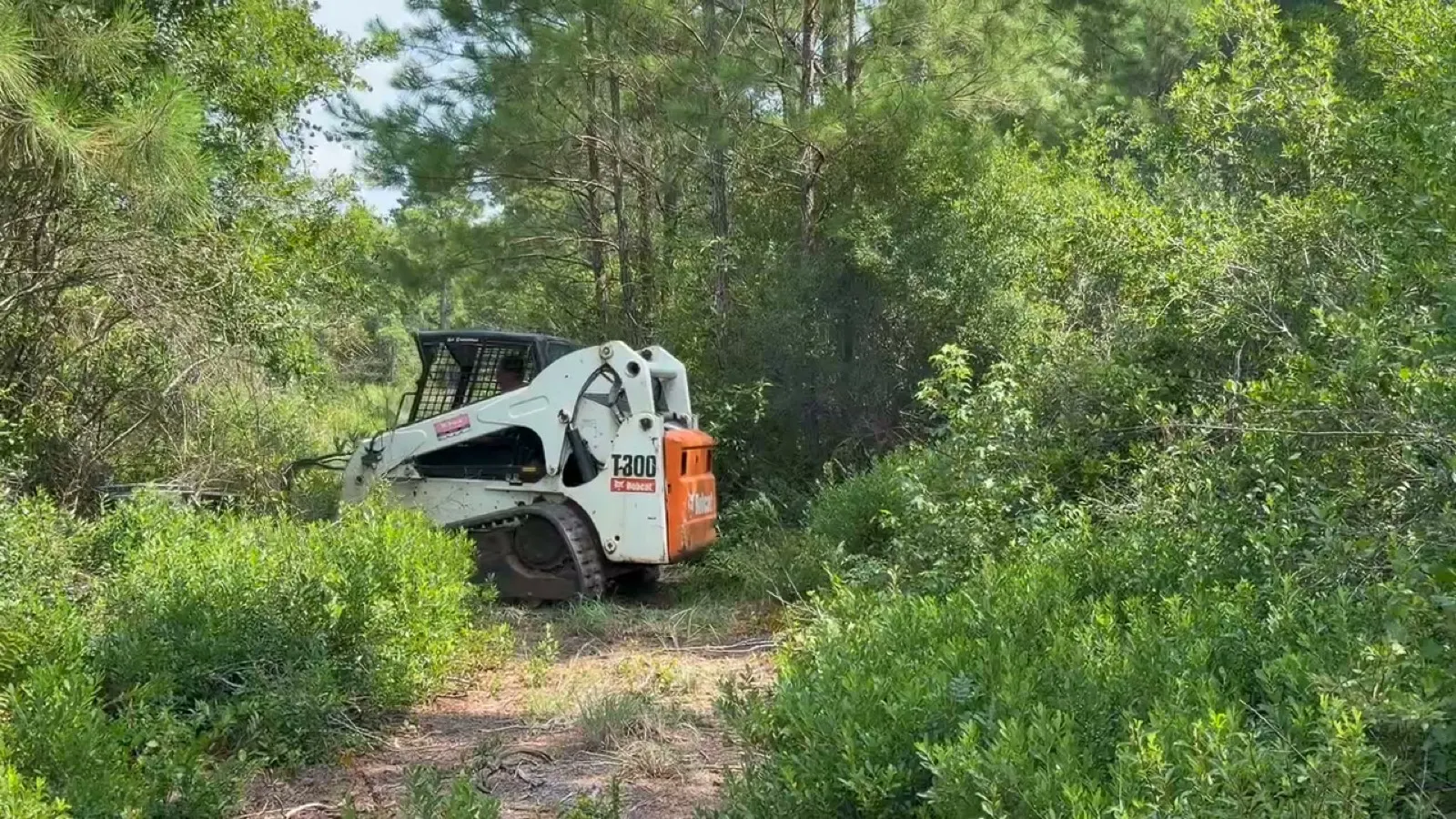
Our forestry mulching service runs a Bobcat T300 compact track loader with a rotary mulcher head. It grinds brush and small trees where they stand. The chips drop in place and stay on the ground as cover.
Do crews price per acre, per hour, or per day?
All three models are common, and published guides carry figures for each.
| Pricing model | Published market range | Where it fits |
|---|---|---|
| Per acre | $300 to $2,500 per acre | Tracts with even, known growth |
| Per hour | $150 to $250 compact, $300 to $500 large units | Mixed or unseen conditions |
| Per day | $1,500 to $4,000 per day | Large multi day clearing |
Per acre bids are the easiest to compare across contractors. Hourly bids protect a crew when growth is patchy or nobody has seen the tract yet. Before you compare quotes, ask each crew which model its number uses.
How many acres can a forestry mulcher do in a day?
Production depends on the machine class and the growth. Large purpose built mulching tractors publish rates up to 4 or 5 acres per day in light cover. A compact track loader setup runs lower and steadier.
On light brush, figure 2 to 3 acres in a working day. Mixed growth with scattered saplings runs about 1 to 2 acres. Dense stands of small trees can hold the pace to a half acre per day.
Those same spans answer the single acre question. A light acre clears in a few hours. A thick acre can take a full day or more, and that machine time is what you are paying for.
What else moves the number on a tract?
Access is the quiet cost driver. A tract the trailer reaches from a firm drive starts producing right away. A tract behind a ditch, a narrow gate, or soft sand takes setup time before the head ever spins.
Ground conditions matter on the coast. Sandy soil drains fast, but low flatwoods hold water after storms. Wet ground slows the machine and can push work to a drier week.
Terrain plays a part too. Flat, open ground lets the machine run long passes. Ditch banks, tight corners, and ground around structures need slow, careful work.
Tract size cuts both ways. Small jobs carry minimums, because trailering the machine costs about the same for a quarter acre as for ten. Larger tracts spread that fixed cost out, so the per acre figure usually drops as acreage climbs.
What kind of growth needs less than full mulching?
Some tracts carry only weeds, briars, and thin volunteer growth. That work is a brush clearing pass rather than full forestry mulching. It moves faster, so it prices toward the bottom of the published spans. Published brush clearing ranges by the acre and by the visit break that tier out.
The line between the two is stem size. If most of what is standing bends when you push it, expect the lighter rate. If the tract holds woody stems you could not snap by hand, budget from the mulching table above.
What does mulching leave off the bill?
Conventional clearing stacks growth into piles, then burns them or hauls them off. Each step is a line item, and each adds days. Mulching finishes when the last stem goes through the head.
The chips stay on the ground as cover. They shade some regrowth and break down over time. The bill covers machine time and travel to the site. South Carolina guides put mulching totals 20% to 30% under conventional clearing on similar ground.
How do you get a firm number for your tract?
Ranges size a budget. A firm number takes eyes on the growth. Stem size, density, access, and wet spots show up in person in a way aerial photos miss.
We give free on-site estimates across the Grand Strand, on both sides of the state line. Category 5 Land Management is a land clearing company in Longs. Most of our work sits within about 50 miles of home.