Bush Hogging Cost: What Field Mowing Runs in South Carolina
Published cost guides put bush hogging near $50 to $250 per acre in South Carolina. A field mowed within the past year sits at the bottom of that span. Chest high growth with woody stems sits at the top. Hourly figures in the guides run about $60 to $150, and most services set a minimum for small lots. Those are market numbers, not a quote, and the condition of your field decides where it lands.
What is the going rate for pasture mowing?
The rate tracks one thing above all, how much is standing in the field. Published guides break it out by condition, and the spread is wide.
| Field condition | Published market range per acre |
|---|---|
| Maintained field, cut this season | $50 to $75 |
| Waist high grass and weeds | $75 to $150 |
| Chest high growth with woody stems | $150 to $250 |
A kept field mows fast in one pass. Tall, matted growth needs slower travel and sometimes a second pass. Growth with woody stems is the slowest and hardest on equipment, which is why it tops the table.
How much do people charge to mow 2 acres?
Two maintained acres commonly total $100 to $200 in published figures. Two acres of heavy, overgrown growth can total $300 to $500.
Two acres is a sweet spot for pricing. The trip charge spreads across more ground than a single acre, so the per acre figure drops. Past that, larger fields keep pricing better per acre for the same reason.
Some services bill by the hour instead. Published hourly figures for a machine and operator run about $60 to $150. A maintained two acre field is roughly one to two hours of mowing. That math lines up with the flat figures above.
Why is there a minimum charge?
The mower has to get to your field. Loading, trailering, fuel, and drive time cost about the same for a half acre as for five acres. A minimum covers that fixed trip cost.
Published minimums often land between $75 and $200. If you have a small lot, it can pay to schedule it alongside other work nearby. It also pays to have the whole property cut at once instead of splitting it into visits.
What makes a field cost more to mow?
Height and density lead the list. The taller and thicker the growth, the slower the pass and the higher the rate tier.
Hidden obstacles run a close second. Old fence wire, dumped debris, stumps, and washouts hide well in tall grass. They slow careful operators down and break careless ones. If you know where the hazards sit, flag them or tell the operator before the first pass.
Ground conditions matter in the flatwoods around Horry County. Low spots hold water after summer storms, and soft ground slows every pass. Ditch banks and tight corners take extra time compared to open field.
Time since the last cut drives the biggest swings. The first cut after a long gap is the expensive one, priced from the top of the table. Every cut after that prices as a maintenance pass from the bottom of it.
When is a field past bush hogging?
Bush hogging is maintenance mowing for light growth. Grass, weeds, briars, and thin brush are its territory. Once woody stems reach an inch or two across, a rotary field mower takes a beating. It leaves shredded stubs instead of a clean cut.
At that stage the field needs heavier equipment, and the numbers change. Growth like that falls under forestry mulching rates, which run several times higher per acre. Our pasture reclamation work exists for that kind of field. It grinds the woody growth flat so mowing can take over again.
The stem test is simple. If you can snap a stem by hand, a mower handles it. If it takes loppers or a saw, it is mulcher work. Tracts that have gone fully woody move into full land clearing territory.
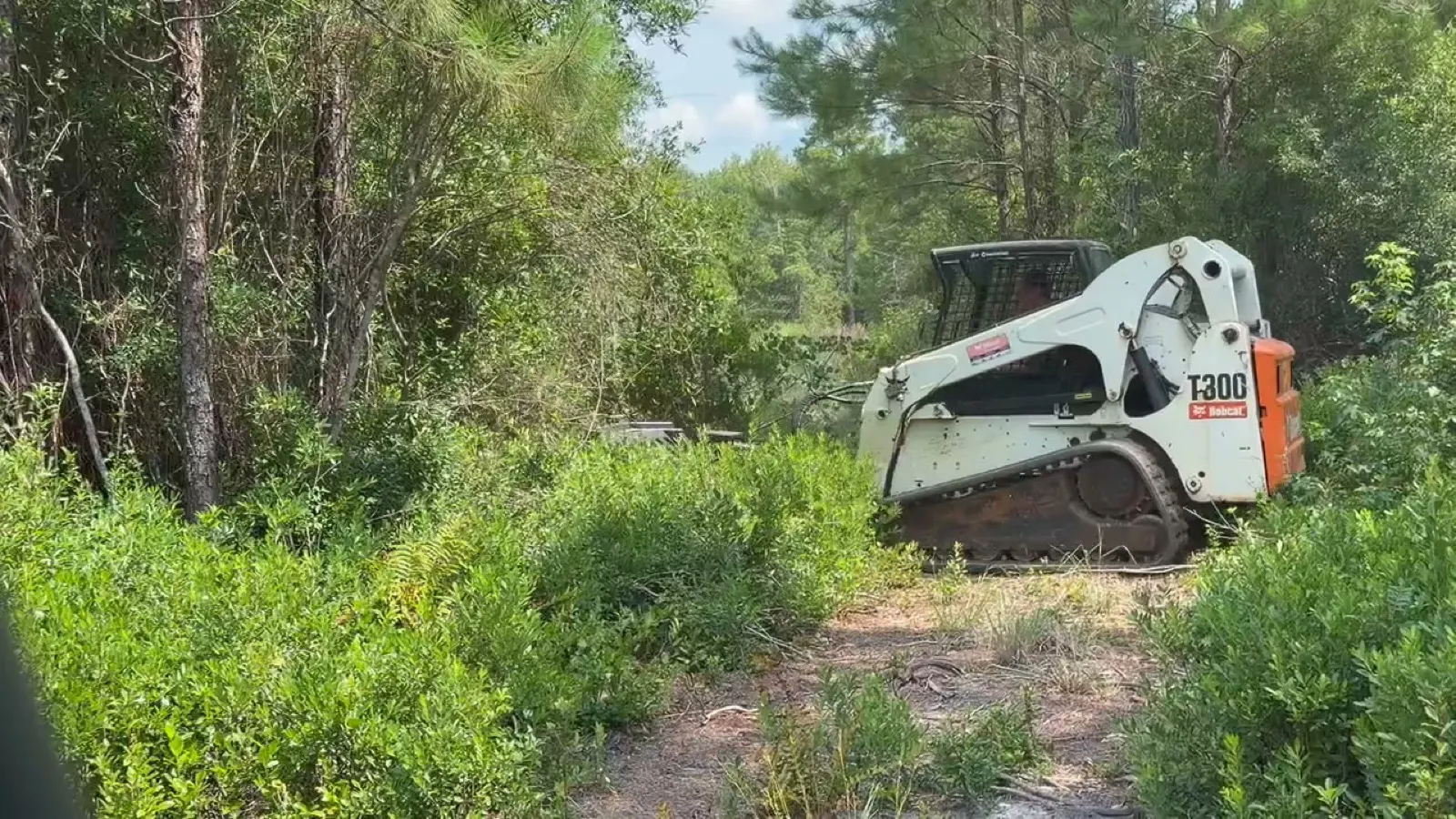
We run one machine for both sides of that line, a Bobcat T300 compact track loader with a mulcher head. Light passes over a maintained field and heavy grinding in a thicket come off the same head. Ground material stays on the field as cover either way.
How do you keep mowing costs down over time?
Cut on a schedule. In coastal South Carolina the growing season runs long, and warm humid weather pushes growth from spring deep into fall. Two or three cuts a season hold most fields.
A field on a schedule stays in the cheapest tier of the table above. Skip a year or two and briars and pine seedlings move in. Skip three or four and the field crosses the stem test. The per acre number can jump several times over.
The cheapest mowing you will ever buy is the cut that keeps the field from going woody. Regular passes cost less each visit and keep the ground usable year round. A standing schedule also means the operator already knows the ground and its hazards, so repeat visits move quicker.
What would your field run?
The published spans size a budget, and your field sets the real number. Growth height, stem size, acreage, and access decide it, and those take eyes on the ground.
We give free on-site estimates and quote before work starts. You can see what a mowing visit covers on our bush hogging service page. Category 5 Land Management works out of Longs and covers the Grand Strand on both sides of the state line.