
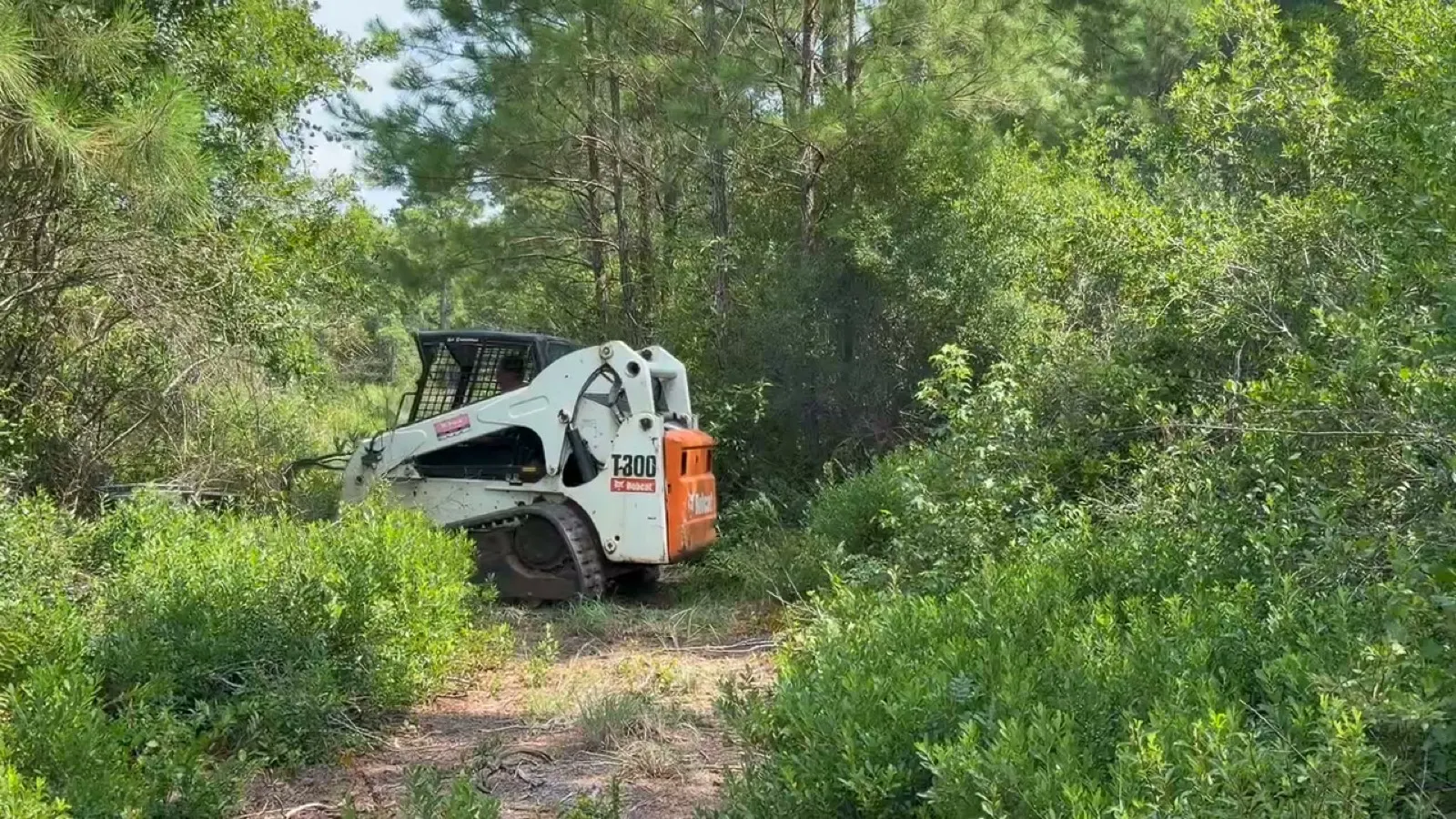
Brush Clearing
Thick undergrowth, briar and vines cleared off yard edges, wood lines and the understory under standing trees. Ground into mulch on site with a forestry mulcher.
View Details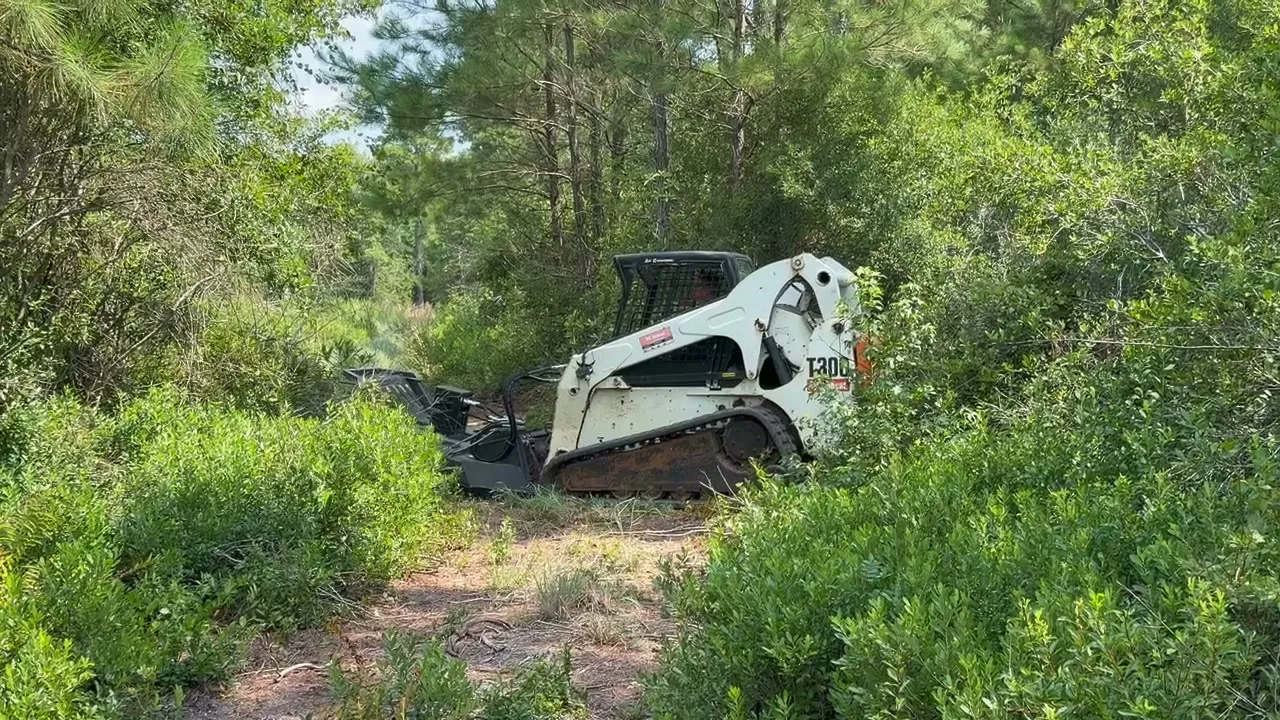
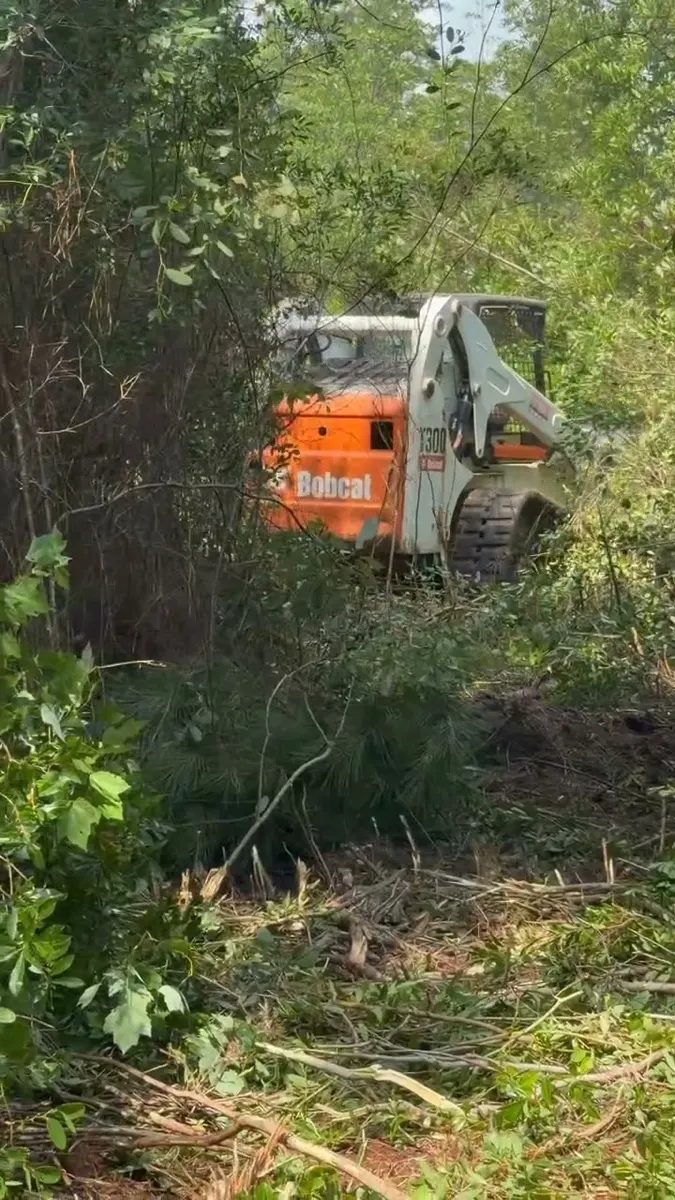
Storm cleanup on this coast means dealing with what the wind put on the ground. Category 5 Land Management is based in Longs, SC and covers Horry, Georgetown, Brunswick and Columbus counties. After a hurricane or a hard summer storm, our Bobcat T300 with a forestry mulcher head grinds downed brush, broken limbs, tree tops and snapped small trees into mulch where they lie. The chips stay on your land as ground cover, so the debris is handled the same day it is ground.
The Grand Strand takes storms straight on. Hurricane Hazel came ashore at the state line near Little River in October 1954 as a Category 4 and pushed an 18-foot surge into Calabash. Isaias made landfall at Ocean Isle Beach in August 2020. Ian came in near Georgetown in September 2022 and dropped trees on homes in Conway and Loris. The Atlantic season peaks around September 10 every year. When the next one passes, the mulcher handles the woody mess on wooded lots and acreage. Big trunks on a roof or a power line are a job for a tree service and the utility, and we tell you that on the phone.
Tell us about your land — we’ll get right back to you.
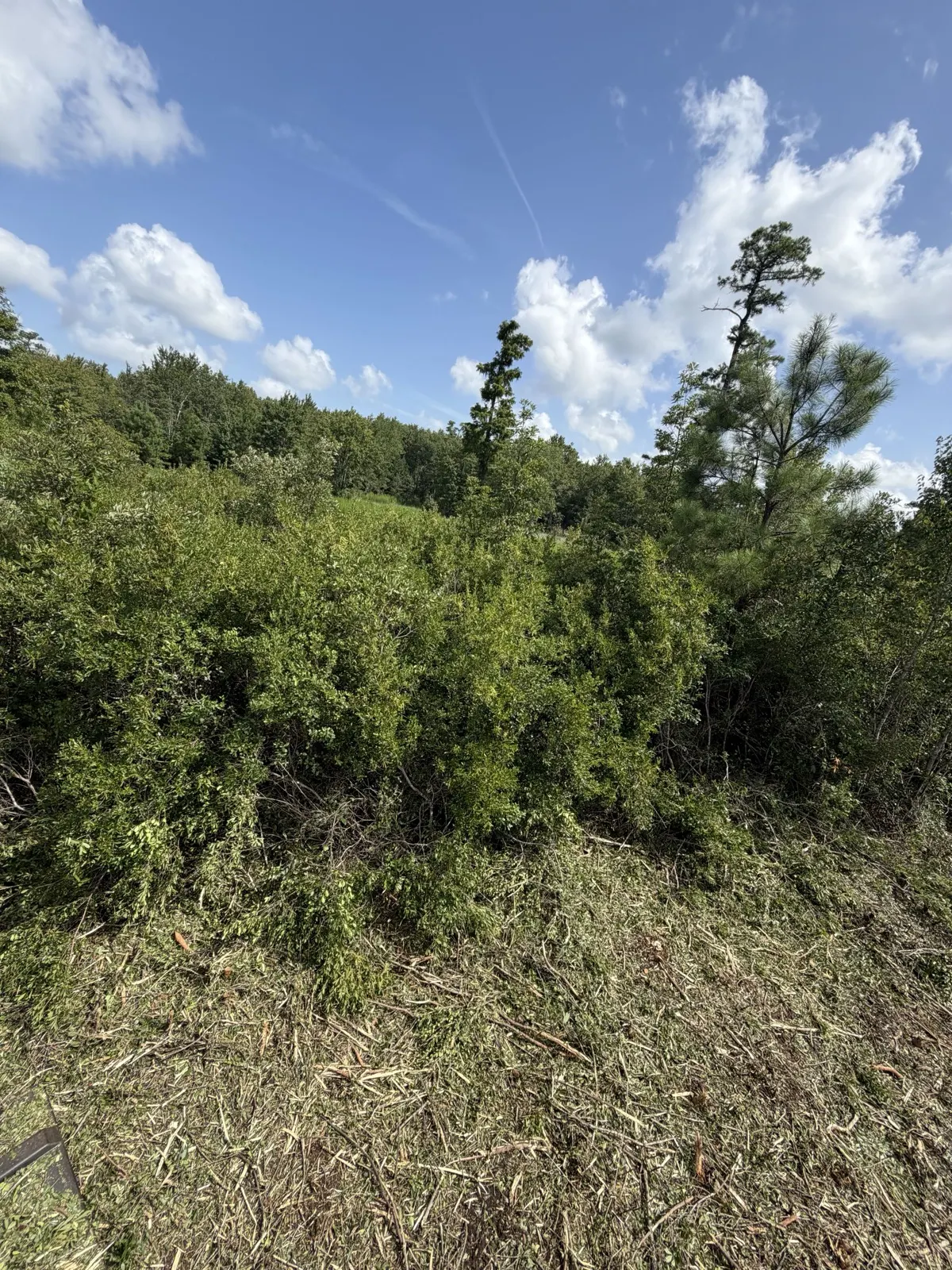
Most storm debris on a wooded lot is brush, limbs and small trees under about eight inches thick. That is exactly what the mulcher head is built for. It grinds the tangle down where it lies and leaves a chip layer instead of a pile. Snapped pines with the top on the ground, blown-over sweetgums, and myrtle thickets flattened by wind all go through the same way. Root balls from small trees that came up whole get ground down with the rest.
Large trunks are different. Anything much thicker than the head can chew needs a saw crew first, and anything resting on a house, a shed or a line belongs to a tree service and the power company. Once the big wood is cut and off the structure, we come behind them and grind the tops, limbs and brush that most crews leave behind. That part of the job is usually the biggest mess and the one nobody wants to haul.
After a big storm, the county may or may not pick up debris at all. Horry County's hurricane guide tells residents to be ready to haul storm debris to a Solid Waste Authority convenience center themselves. After Hurricane Matthew in 2016, county pickup ran only along county-maintained roads, and anything over six inches thick and four feet long had to go to the landfill on Highway 90. Private roads and gated communities were on their own.
Grinding in place skips the whole question. The debris is handled the day the machine runs, with nothing staged at the road for weeks. Burning is the other option, and it comes with rules. State law requires a call to the Forestry Commission before any yard debris burn outside town limits, and Horry County requires 50 feet of clearance from structures and property lines. Burn bans follow dry spells. Mulch needs none of that.
Florence in 2018 put 23.63 inches of rain on Loris and pushed the Waccamaw River at Conway to a record 21.16 feet. Ground like that stays soft for weeks, and wheeled equipment cuts it to pieces. The T300 rides on wide rubber tracks that spread its weight. It works soft ground sooner than a truck can, and the mulch it leaves protects washed-out soil while it dries. We still wait on standing water. Saturated woods get scheduled once the water drops.
Storm work is not only the week after landfall. Blowdown left in the woods for a season turns into a briar tangle nobody can walk through. Fence lines under fallen tops stay down until someone clears them. Owners who want the lot back to normal ground pair the storm pass with everyday brush clearing work, and owners who lost the whole lot to blowdown are closer to clearing the entire lot. Either way the estimate is free, and we come look before we quote.
Free, no-obligation estimates across the Grand Strand, both sides of the SC/NC line.
(843) 385-1090From the first call to the last pass of the mulcher, here is exactly how it goes.
Tell us where the property is and what you want the ground to do. We set a time to come look at it.
We come out, look at the growth and the ground, and talk through what the job takes. The estimate is free and it is a real number.
The Bobcat T300 grinds brush and small trees into chips where they stand. No burn piles, nothing hauled off your land.
Clean, walkable ground with a mulch layer over it. Ready to mow, plan on, fence, or just look at without the overgrowth.
Common questions about storm cleanup across the Grand Strand, both sides of the SC/NC line. Don't see yours? Give us a call — we're happy to help.
Thick undergrowth, briar and vines cleared off yard edges, wood lines and the understory under standing trees. Ground into mulch on site with a forestry mulcher.
View Details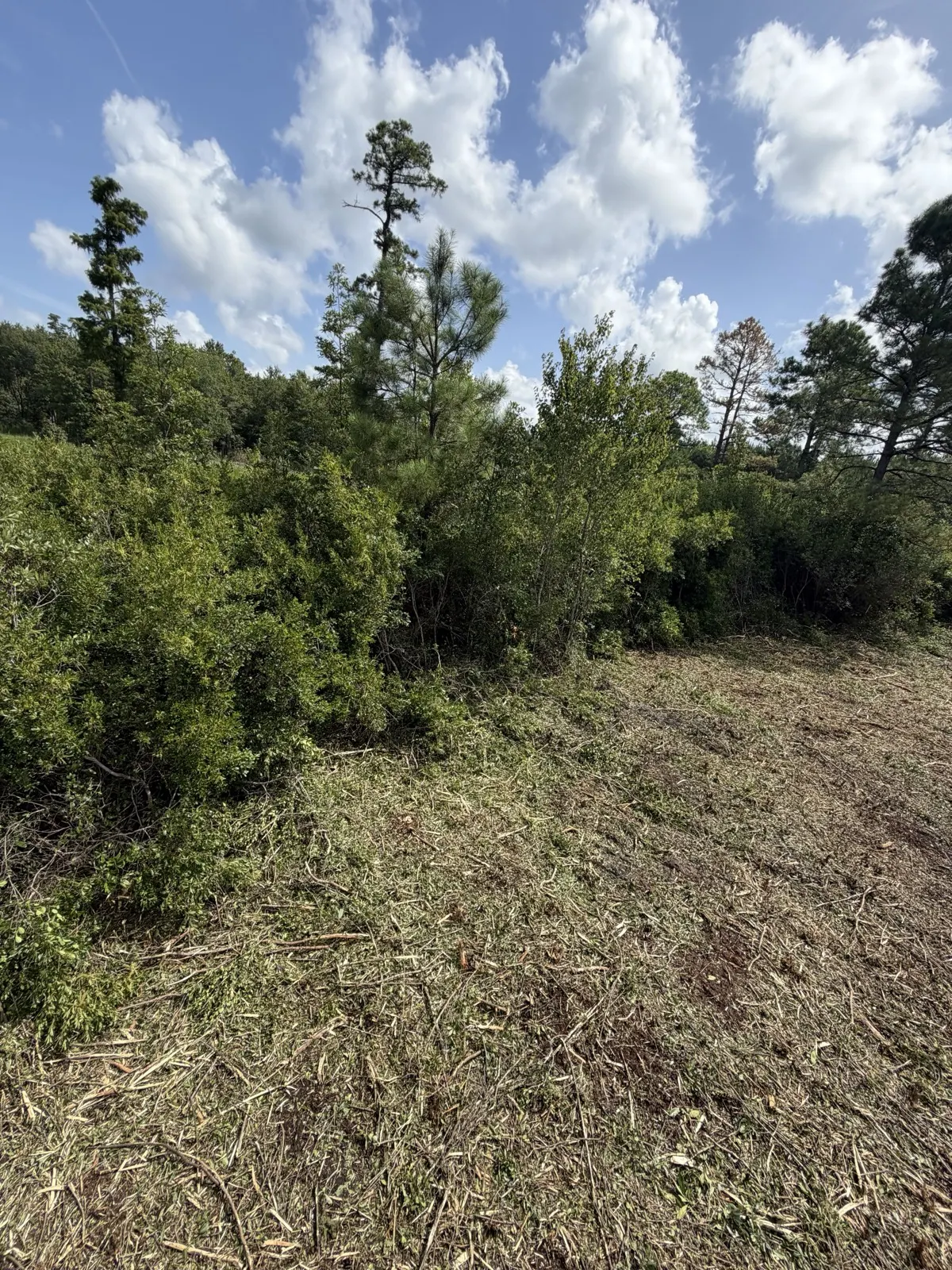
Lot clearing for single residential and small commercial lots. We mulch brush and small trees in place, so your lot stays clean and usable.
View Details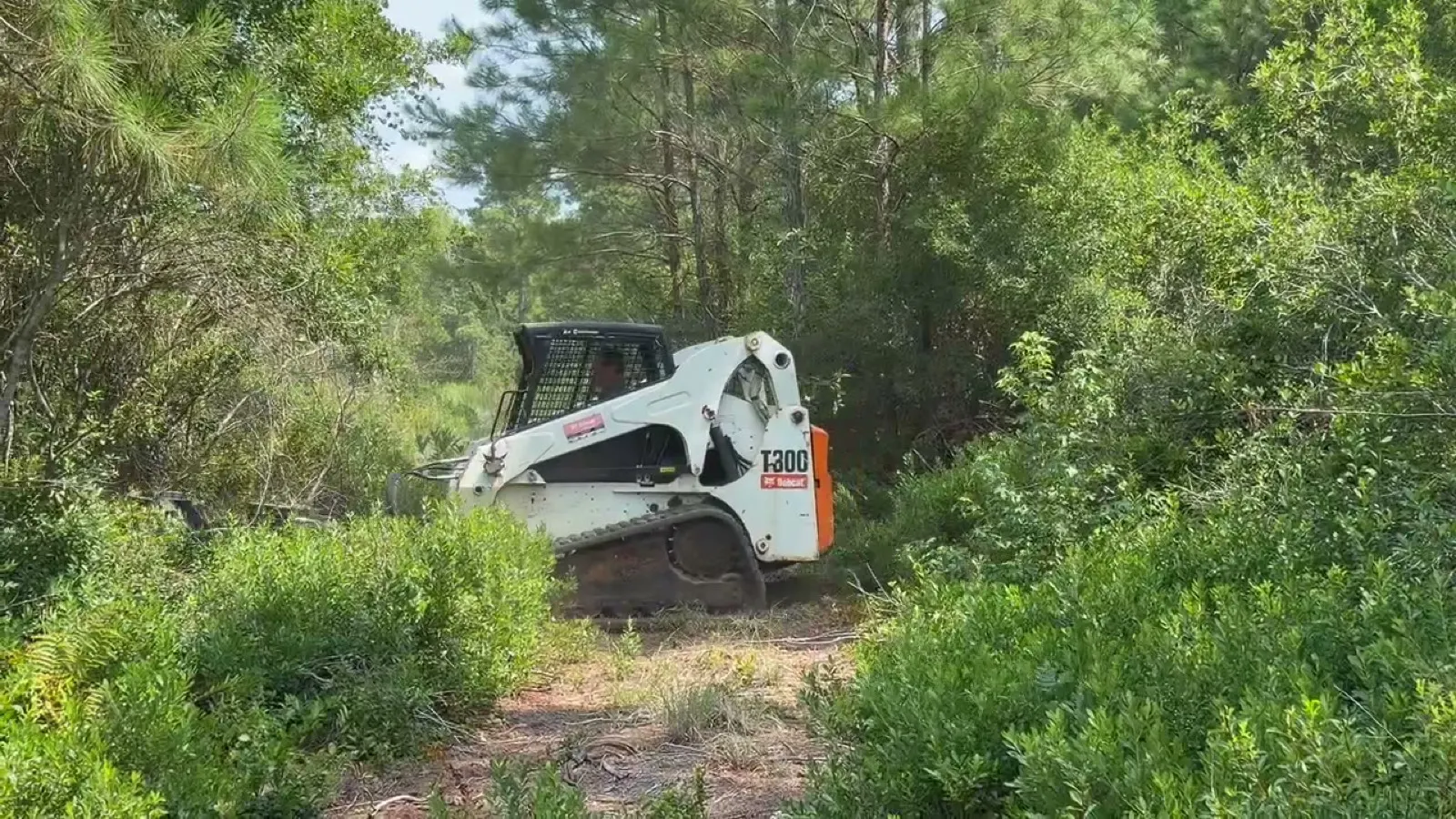
Forestry mulching grinds brush and small trees into a mulch layer right where they stand. One machine, one pass, and no burn piles left behind.
View Details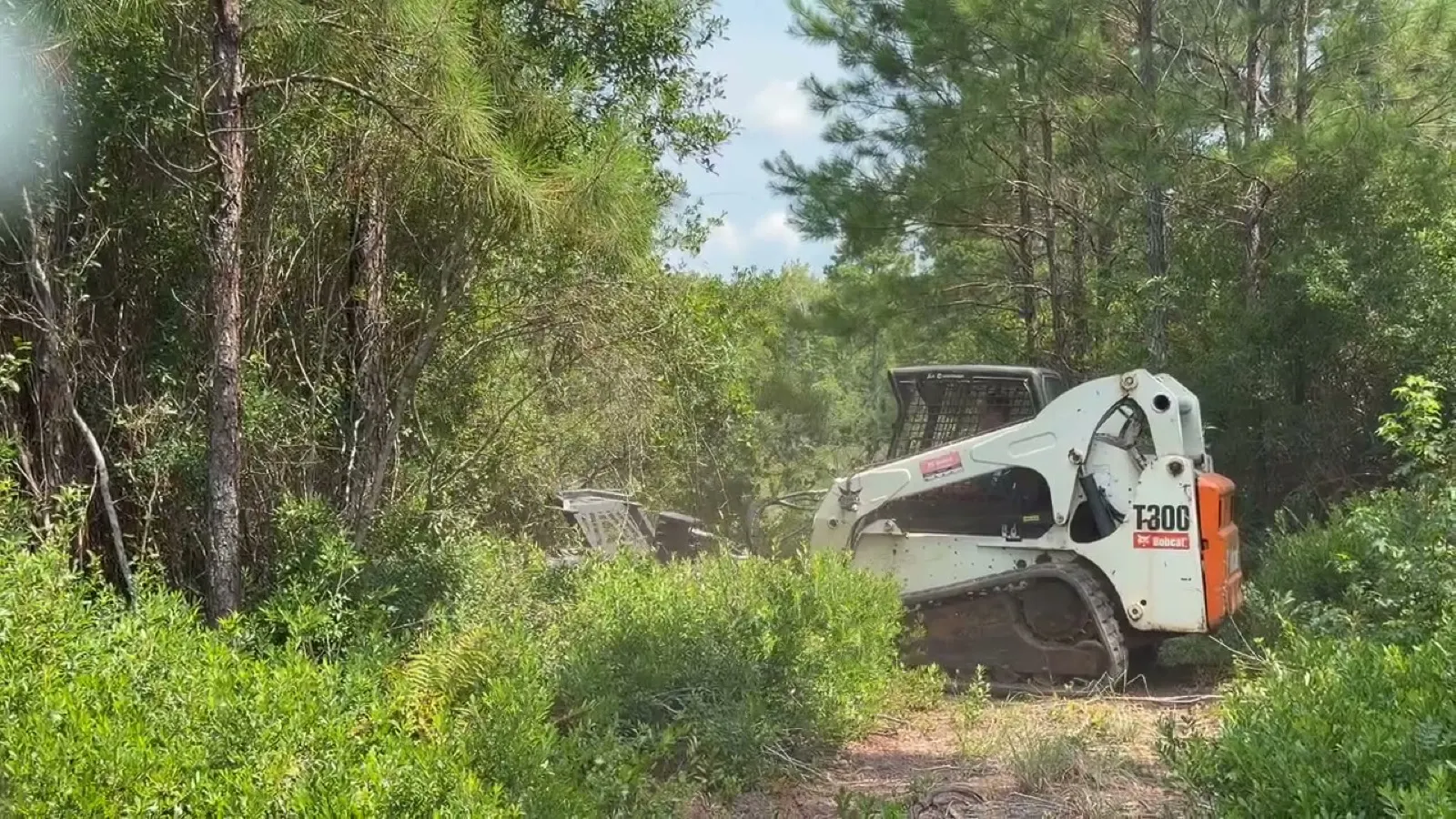
We mulch the growth off overgrown fence lines and private lanes. One tracked machine out of Longs, SC and the farm country around it.
View DetailsA local land clearing company based in Longs, working both sides of the state line. Free on-site estimates, and the same machine and process on every job.
The forestry mulcher grinds growth into chips where it stands. No burn piles to permit and watch, no dump trucks, and the ground cover stays on your land.
We look at the property before we price it. You get a real number for the job as it stands, before any work starts, and the estimate costs you nothing.
A tracked machine on flat, sandy coastal plain with a high water table. It rides where wheels sink, and we work both sides of the SC/NC line.
An overgrown lot, a field that got away from you, a fence line you can't see anymore? Call or send the form. We come look at the property, talk through what you want the ground to do, and price the job before any work starts. Estimates are free.
Tell us about your land — we’ll get right back to you.