Does Clearing Land Trigger Rollback Taxes in South Carolina?
Not by itself. Under South Carolina’s code, rollback taxes follow a change in use. The code points to actions by the landowner that are inconsistent with agricultural use. Clearing timber for a house or for lots to sell points to a new use. Clearing for pasture keeps the use agricultural, but the acreage rules change. The county assessor decides.
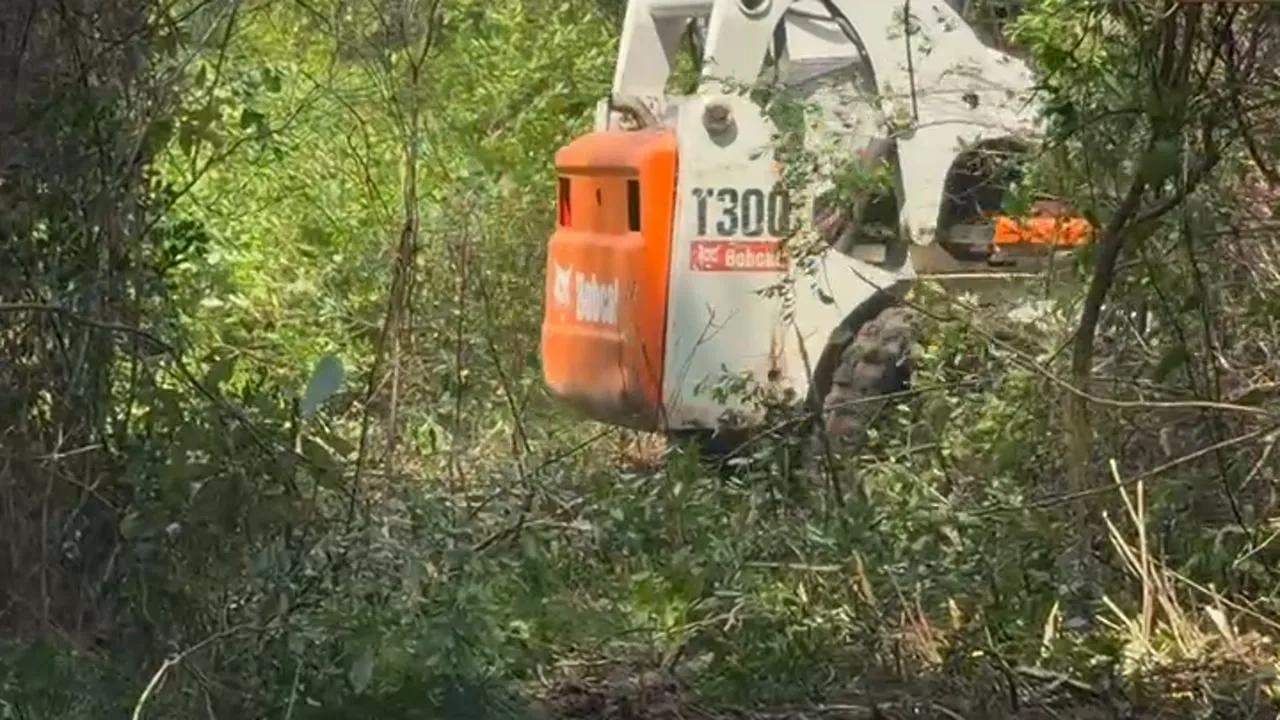
Lot clearing ahead of a home build is the plainest example of land headed to a new use. Our forestry mulcher grinds brush and small trees, up to roughly 6 to 8 inches across, where they stand. The work looks the same on every parcel. The tax question turns on what the land becomes afterward.
We are a land clearing company, not a tax adviser. Everything below is what the South Carolina Code of Laws says, mostly Title 12, Chapter 43. How it applies to your parcel is for the county assessor or a tax professional to say.
What are rollback taxes in South Carolina?
South Carolina lets qualifying farm and timber land be taxed on its value for agricultural purposes. For land owned by individuals, the assessment is 4 percent of that agricultural value. Real property the code places in no other class is assessed at 6 percent of its fair market value.
Rollback taxes come due when that land is applied to a use other than agricultural. The amount is the difference, if any, between two tax bills. One is the tax paid on the agricultural basis. The other is the tax the land would have paid as other real property in the taxing district.
The difference is counted for the year of the change and each of the three tax years before it.
Does clearing land trigger rollback taxes by itself?
The rollback rules in Title 12, Chapter 43 never mention clearing. Section 12-43-220(d)(4) applies rollback taxes when agricultural land is applied to a use other than agricultural. It says that change shows in actions by the landowner that are inconsistent with agricultural use.
So the use that follows the clearing is what counts. A timber tract has to be devoted actively to growing trees for commercial use. Clear it for a house or a set of lots, and the land is headed to a residential use. Whether that is a change in use, and in which tax year, is the county assessor’s call.
Clearing part of a tract raises its own question. If at least 50 percent of a tract qualifies as agricultural, the code classifies the whole tract that way. That holds as long as no other business for profit runs on it. How a cleared homesite inside a larger tract is treated is a question for the assessor.
What if you clear timber to make pasture or cropland?
Pasture and crops are still agricultural uses. The code’s definition covers land used for agriculture, grazing, horticulture, forestry, dairying and mariculture. What changes is the minimum size the tract has to meet.
| How the land is used | Minimum tract size in Section 12-43-232 | Other ways the code lets it qualify |
|---|---|---|
| Growing timber for commercial use | 5 acres or more | A smaller timber tract counts if it is contiguous to, or under the same management system as, a qualifying timber tract |
| Pasture, crops or other non-timber use | 10 acres or more | $1,000 of gross farm income in at least 3 of the 5 tax years before the application, or contiguous non-timber tracts that add up to 10 acres |
That gap matters on a timber tract between 5 and 10 acres. As timber, it meets the 5-acre floor. As pasture, it sits under the 10-acre floor, so it needs the income test or contiguous land. Whether rollback taxes follow is up to the county assessor, so ask before the work starts.
Some fields have grown up in brush and young trees. Pasture reclamation with the forestry mulcher grinds that growth into chips where it stands. The chips stay on the ground as cover. The tax side of the plan still starts with the assessor.
Does underbrushing under standing timber change the use?
Underbrushing works under the canopy. Our forestry mulcher grinds the understory: brush, vines, saplings and small trees up to roughly 6 to 8 inches across. The pines and hardwoods overhead stay standing, and the chips stay on the ground as cover.
The code’s timber test asks that the tract be devoted actively to growing trees for commercial use. Underbrushing beneath a timber stand leaves those trees in place and growing. The code does not mention underbrushing by name, though. Whether a given stand still qualifies is the county assessor’s call.
How are rollback taxes calculated?
The county assessor works out the rollback for each year involved. Section 12-43-220(d)(4) lists four steps, labeled (A) through (D).
| Step | What the assessor works out | How the code gets there |
|---|---|---|
| (A) Market value | The land’s fair market value without the standing timber | Valued under the rules for other real property in the same classification |
| (B) Assessment at market value | The assessment the land would carry for that tax year | Step A times the assessment ratio the code sets |
| (C) Additional assessment | The gap between the two assessments | Step B minus the land’s actual assessment for that year |
| (D) Rollback for the year | The tax on that gap | Step C times that year’s tax rate for the taxing district |
The assessor repeats the steps for each rollback year, and the yearly results add up to the bill. Step A leaves out the standing timber. Step D uses each year’s own tax rate.
Values and tax rates change by taxing district and by year. For an estimate on your parcel, ask the county assessor’s office or a tax professional.
How many years back do rollback taxes go?
Today the rollback covers the year of the change and the three tax years before it. A year counts only when the land had the agricultural assessment in it.
The three-year rule comes from 2020 Act No. 173, which rewrote this part of Section 12-43-220. The act took effect January 1, 2021. It applies to agricultural land changed to another use after 2020. Before that act, the period was five years, according to a 2021 law firm summary of the change.
You may also run across H.3367, a House bill from the 2025-2026 session. It would make rollback taxes apply only to the previous tax year instead of the previous three. As of October 2026, its statehouse page shows it referred to the House Committee on Ways and Means. A bill is a proposal, not law, and the code still reads three years.
Does platted open space lower the rollback bill?
Section 12-43-222 gives development one break. It covers land changed from agricultural use for residential or commercial development. Part of that land may be marked on the recorded development plat as green space for conservation or open space.
The open space has to equal 10 percent or more of the area inside the development’s outermost boundaries. When it does, it is valued at its open-space use in the rollback math. The county assessor sets that value.
Two limits apply. The rule only applies when the local government requires the open-space designation as a condition to develop. And if the open space changes use within five property tax years of getting the break, the break falls away. The landowner at the time of that change owes rollback taxes as if the rule never applied.
When do you have to tell the assessor about a change in use?
Within six months. Section 12-43-220(d)(3)(A) says the landowner must notify the assessor within six months of a change in use. Horry County’s assessor guide repeats that six-month rule.
Missing the deadline adds a penalty of 10 percent plus interest at one-half of one percent a month. Both are paid on the difference between what was paid and what should have been paid. The penalty is at least $30 and no more than the current year’s taxes. It comes on top of any other penalty the law provides.
The agricultural assessment starts with paperwork too. The landowner or an agent files a written application with the county assessor, on the county’s forms. It is due by the first penalty date for taxes in the first tax year claimed. Horry County’s guide gives a dated example: for tax year 2024, file between Jan. 1, 2024 and Jan. 15, 2025.
No yearly refiling is needed while the use stays agricultural and the ownership stays the same. Horry County’s guide adds that failing to file and qualify means an automatic 6 percent assessment. Still, the code says a missed application alone does not bring rollback taxes while the actual use stays agricultural. In Georgetown County, the application goes to the Georgetown County assessor.
Who decides, and can you appeal?
The county assessor decides how the code applies to your land and works out any rollback taxes. Along the Grand Strand, that means the Horry County or Georgetown County assessor’s office.
If the assessment is changed from agricultural, or rollback taxes are assessed, the code lets the landowner appeal. While the appeal is open, the property must continue to be assessed as agricultural. Rollback taxes may not be applied until the final appeal date.
Since the use sets the tax, the call to the assessor comes before the clearing. A tax professional can tell you what a change could cost on your parcel. Permits are their own question, and the permits a clearing job can need are laid out in a separate guide.
The price of the clearing is separate from any tax bill. Published price ranges for clearing land show what moves that number. Our estimates are free and done on site in Horry and Georgetown counties and in Brunswick and Columbus counties, NC. Filing and tax questions belong with the county assessor and your tax professional.