
Reclaiming an Overgrown Pasture: What Actually Works
A pasture that has gone to briars and saplings will not mow back into shape. What works is a sequence. Mulch the woody growth flat first, then hold the field with regular mowing while resprouts are young and soft. Skip the first step and the mower loses. Skip the second and the brush is back within a few seasons. Here is why fields go under, what the recovery looks like, and how the ground holds afterward.
Why do pastures go under so fast here?
Coastal South Carolina grows plants nearly year round. The season runs long, the air stays humid, and rain comes steady through summer. Any field that stops getting cut starts changing the same year.
The early wave is briars, smilax, and broomsedge. Wax myrtle and gallberry follow, because they thrive in sandy flatwoods soil. Then the trees arrive. Sweetgum and loblolly pine seed in from every fence row and woodline, and both grow fast here.
Storm seasons speed it up. Hurricane winds open up canopy and scatter seed, and the flush of light after a storm pushes regrowth hard. Three to five missed years is often enough. A working pasture becomes a thicket with a thousand woody stems per acre.
Why does mowing alone fail past a certain point?
A field mower is built for grass, weeds, and thin brush. Once stems pass an inch or two across, the blades hammer instead of cut. The machine takes damage, and the field gets a ragged shredding instead of a clean pass.
The bigger problem is below the cut. Mowing takes the tops and leaves the roots at full strength. Sweetgum answers a cut by sending up several new shoots from the stump and roots. Cut it with a mower once a year and you are farming sweetgum.
Briar thickets behave the same way. The canes come back from deep roots, thicker each round. Past the woody stage, mowing is not maintenance anymore. It is a slow loss to plants that regrow faster than one pass a year can remove.
There is a cost angle too. Field mowing rates and mulching rates sit far apart per acre. Every season a field waits, more of it crosses from the cheap column to the expensive one. Early is the cheapest version of this job.
What does the mulch then maintain sequence look like?
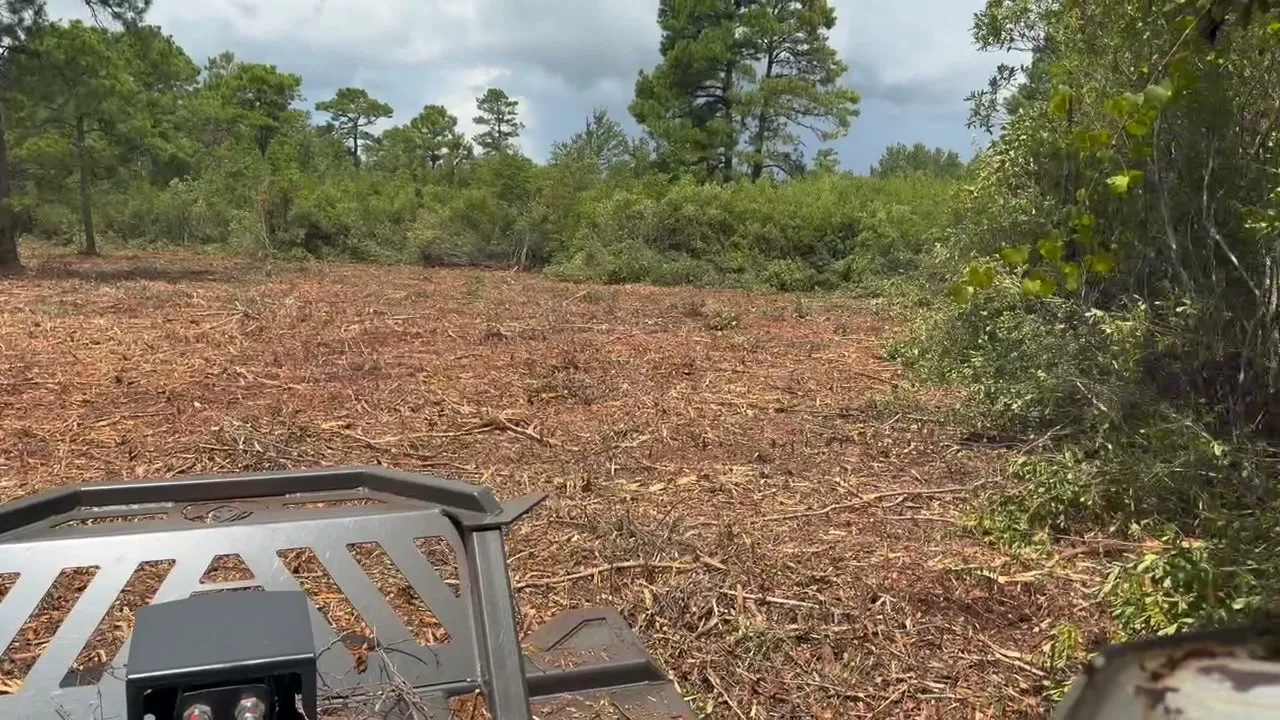
Step one is the reset. A forestry mulcher grinds the standing growth, briars, myrtle, and saplings alike, down to ground level. The chips fall where the machine works and stay as cover. This is the heart of our pasture reclamation service. All of it happens in place, with a Bobcat T300 and a mulcher head.
Step two starts the next growing season. Roots left in the soil push up new shoots, and they come up soft and thin. That is when regular bush hogging takes over. Two or three passes a season keeps every resprout from ever getting woody again.
The sequence works because each tool fights the battle it can win. The mulcher removes growth the mower cannot touch. The mower then removes regrowth cheaply, season after season, before it needs the mulcher again.
What does the ground look like after mulching?
The field comes out open, with a layer of wood chips where the brush stood. Stumps are cut to grade or slightly below. The roots stay in the soil, holding the sand together.
That cover matters on coastal ground. Bare sandy soil moves in wind and washes in storms. The chip layer holds it in place, shades out part of the regrowth, and breaks down over the following seasons. Grass finds its way back through the thin spots first, and mowing passes speed the breakdown.
There are no burn piles waiting on the weather and no trucks hauling debris down your drive. The material that grew on the field goes back into the field. The work is finished when the machine loads up.
How do you keep the field open afterward?
Put it on a mowing calendar. Two or three cuts through the growing season hold a reclaimed field in coastal South Carolina. Each cut is fast and cheap compared to the reset, because everything standing is soft regrowth.
Watch the edges. Fields go under from the outside in, and fence rows are where seedlings start. Brush along the boundary drops seed into the field every year and swallows posts and wire while it does. Keeping the perimeter open with fence line clearing protects the fence and cuts off the seed source.
Check the field each spring for woody starts. A sweetgum shoot you can snap in April is nothing. The same shoot ignored for three years is a tree, and a few hundred of them is a project. The calendar is the whole defense, because fields cut on schedule stay fields.
Where do you start on your field?
Start with a look at the growth. Stem size decides what equipment the field needs, how long the work takes, and what upkeep runs afterward. A field just going shaggy may only need mowing. A field with woody stems needs the reset first.
We give free on-site estimates. Category 5 Land Management works from Longs and covers the Grand Strand on both sides of the SC and NC line, out to about 50 miles. Bring us a field that got away from you. We will tell you whether mowing alone can hold it or the reset comes first.