
How Long Does It Take to Clear an Acre of Land?
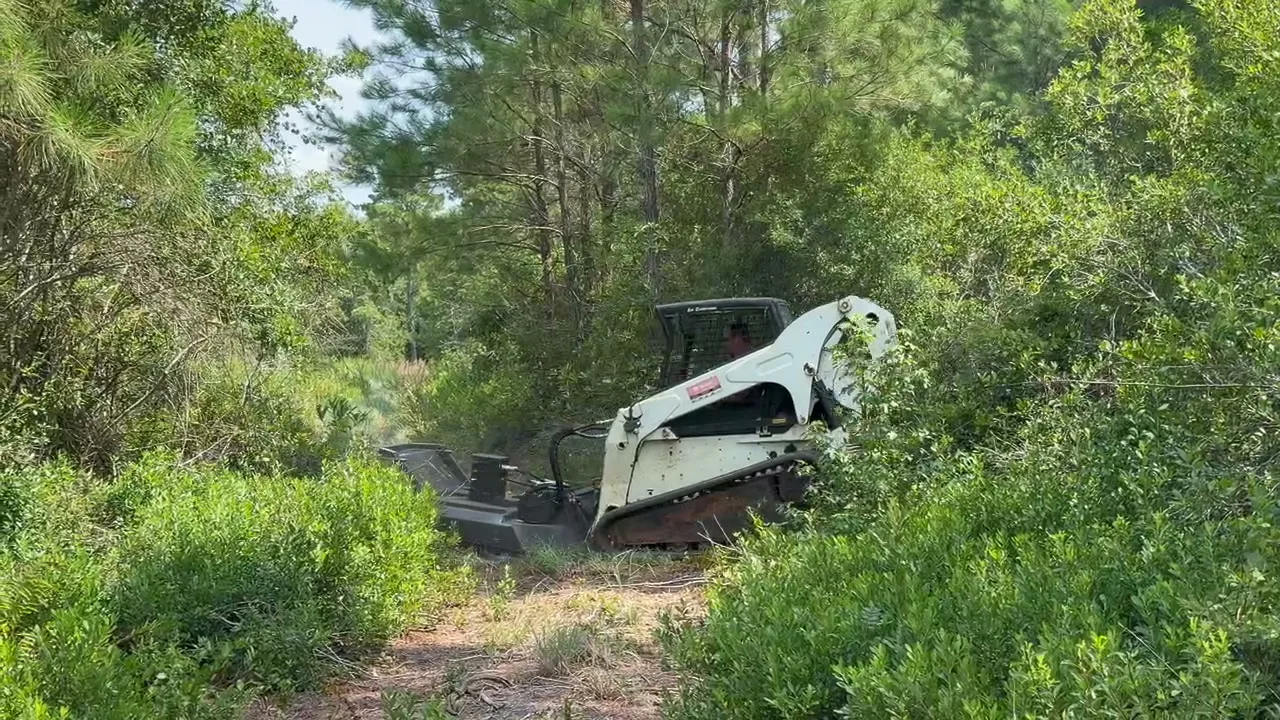
With a compact track loader and a mulcher head, an acre of light brush clears in 2 to 4 hours. An acre of mixed growth takes closer to a full working day. A dense acre of saplings and small trees can run a day or two. Density sets the pace, so a range is the only answer that holds up. Here is how to place your own land inside those ranges.
How many acres can a mulcher do in a day?
Daily production depends on the machine and the growth. Large purpose built mulching tractors publish rates of 4 or 5 acres per day in light cover. A compact track loader setup like ours produces less per day but fits through gates and works tighter ground.
On light brush, a compact machine covers 2 to 3 acres in a working day. Mixed growth with scattered saplings runs 1 to 2 acres. Dense stands of small trees can hold the pace to a half acre.
Flip those numbers and you get the single acre answer. Light growth is a morning. Average growth is a day. Heavy growth is longer, and pretending otherwise is how jobs run over.
What kind of growth slows the machine most?
Stem size is the biggest factor. Briars, vines, and finger size brush feed through a mulcher head almost at travel speed. Stems of 3 to 5 inches take deliberate work. Stems in the 6 to 8 inch class take multiple bites each, and each one adds minutes.
Around here the slow tracts are usually old fields gone to sweetgum and loblolly pine. A few years of coastal growing season turns scattered seedlings into a thousand stems per acre. Each stem is small, but the count is what eats the day.
The fast tracts are the viney ones. Smilax, briars, and wax myrtle look terrible and clear quickly. A tract that looks like a green wall can move faster than a tidy stand of young pines.
How long would 7 acres take?
Multiply the daily rates and add margin for weather and moves. Seven light acres run about three working days. Seven mixed acres run roughly a week. Seven dense acres can stretch to two weeks.
Larger tracts also gain a little efficiency. The machine arrives once, sets up once, and spends more of each day grinding instead of loading and unloading. That is one reason bigger jobs price better per acre than small ones.
Machine days and calendar days are different things. A seven acre job usually runs on consecutive days, but a storm can split it. When a project has a hard date, the safe plan books the machine early and leaves a weather day unused.
What else slows a job down?
Wet ground is the big one on the coast. Our sandy soil drains fast, but the flatwoods sit low, and summer storms can leave water standing for days. Tracks on saturated ground cut ruts and slow every pass. Sometimes the right call is to wait for two dry days.
Access comes next. A tract with a firm entrance off the road starts producing within minutes. A tract behind a ditch, a locked gate, or a soft shoulder burns time before the first stem falls.
Obstacles hide inside overgrowth. Old fence wire, dumped debris, stumps from a past clearing, and washouts all force slow, careful passes. If you know what is out there, say so up front. It shortens the job.
Structures and lines matter too. Work near a well head, a septic field, a fence worth keeping, or a property corner goes slower on purpose. Careful beats fast within a few feet of anything that costs money to replace.
Marking helps more than anything else you can do before the machine arrives. Flag property corners, irrigation heads, and anything buried that you know about. Slow zones shrink when the operator knows exactly where they are.
Does the clearing method change the timeline?
It changes it a lot. Mulching is a single process. The machine grinds standing growth into chips that stay on the ground. The job ends when the last stem goes through the head, and the ground is usable that same day.
Conventional clearing with an excavator runs in stages. Push the growth over, stack it, then burn the piles or load and haul them off. Each stage adds days, and burn piles can sit waiting on weather. That route makes sense when a project needs stumps and roots out of the ground. We leave that work to dirt contractors.
You can read how the single pass process works on our forestry mulching page. For growth up to the size our head handles well, it is the shortest path from overgrown to open.
How do you plan a timeline for your own project?
Start from why the land is being cleared. A build comes with a deadline, so clearing a building lot needs weather margin in the schedule. If you are opening acreage for pasture, trails, or hunting, a week either way rarely matters.
Then get the growth looked at in person. Density is the whole ballgame, and it is hard to judge from the road or from aerial photos. We give free on-site estimates for our land clearing services across the Grand Strand. We work both sides of the state line, out to about 50 miles from Longs. After a look at the growth, the timeline stops being a guess.